Oregon’s rocky habitats provide critical nesting habitat to over one million nesting seabirds, support productive kelp beds, marine mammal haul-out sites, habitat for hundreds of fish species including important spawning areas for commercially important juvenile rockfish, and are home for thousands of invertebrate species including sea stars, anemones, and shellfish.
Sea Lions & Cormorants, Erik Urdahl
These epicenters of rich marine biodiversity are increasingly vulnerable to escalating disturbances from people, marine heat waves, and other impacts.
Safeguarding rocky habitats supports coastal economies and jobs for Oregonians. Millions of visitors from around the world every year for recreational opportunities from tidepooling, fishing and wildlife viewing – supporting a $2+ billion coastal tourism industry. Rocky habitats are vital for commercial fishing, research and aquaculture as well.
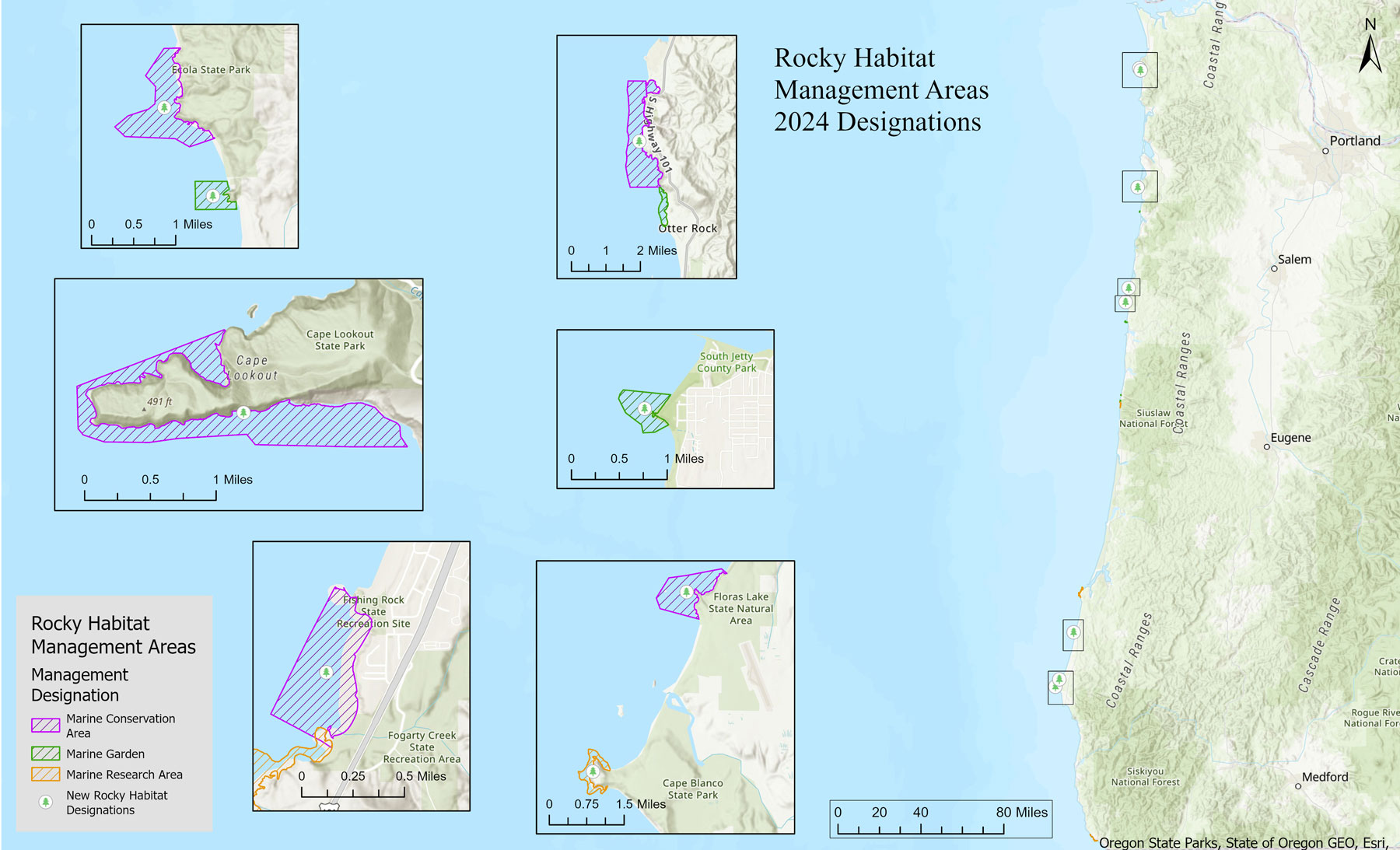
Eight new nominated sites were officially designated in 2023. These sites include five Marine Conservation Areas (Ecola Point, Cape Lookout, Fogarty Creek, Cape Foulweather, and Blacklock Point), two Marine Gardens (Coquille Point, Chapman Point), and one Marine Research Area (Cape Blanco).
We are currently working to ensure relevant state agencies have the capacity and budgetary support to manage these sites effectively and community groups have the support and organization to steward these sites. We also will work to support new inventory and monitoring efforts so rocky habitat sites are managed with the best new science. We will need your support to protect Oregon’s rocky habitats.